should bike riders wear helmets?
insights
There is much hyperventilating about helmets in cities around the world, but there is no evidence that requiring riders to wear bike helmets is more effective in decreasing injury and death rates than the very real effect of safety in numbers — the cumulative safety effect of having more people on bikes riding the streets. On the contrary, there is growing evidence that cities with helmet laws succeed only in significantly decreasing the number of people riding bikes, reducing crashes but forfeiting the safety benefits of more riders.
As more people bike, their visibility on the street increases. When drivers see more bike riders, they learn to expect them, to anticipate their movements. They slow down and look around when they have to share the road, which also protects people who walk, completing a virtuous cycle. By the logic of helmet proponents, European nations like Denmark and the Netherlands, with vast numbers of cyclists riding without helmets, should see sky-high rates of head injuries. Yet they are far safer than other countries and are becoming only more so as the number of cyclists increases.
Just as there is often a vast difference between what people fear and what actually endangers them, there is also a chasm between what is safe and what feels safe. Safety isn't just an absence of threats on the street. It's also a feeling that people on foot, on a bike, or in a car have when they are recognized, respected, and securely positioned on the street.
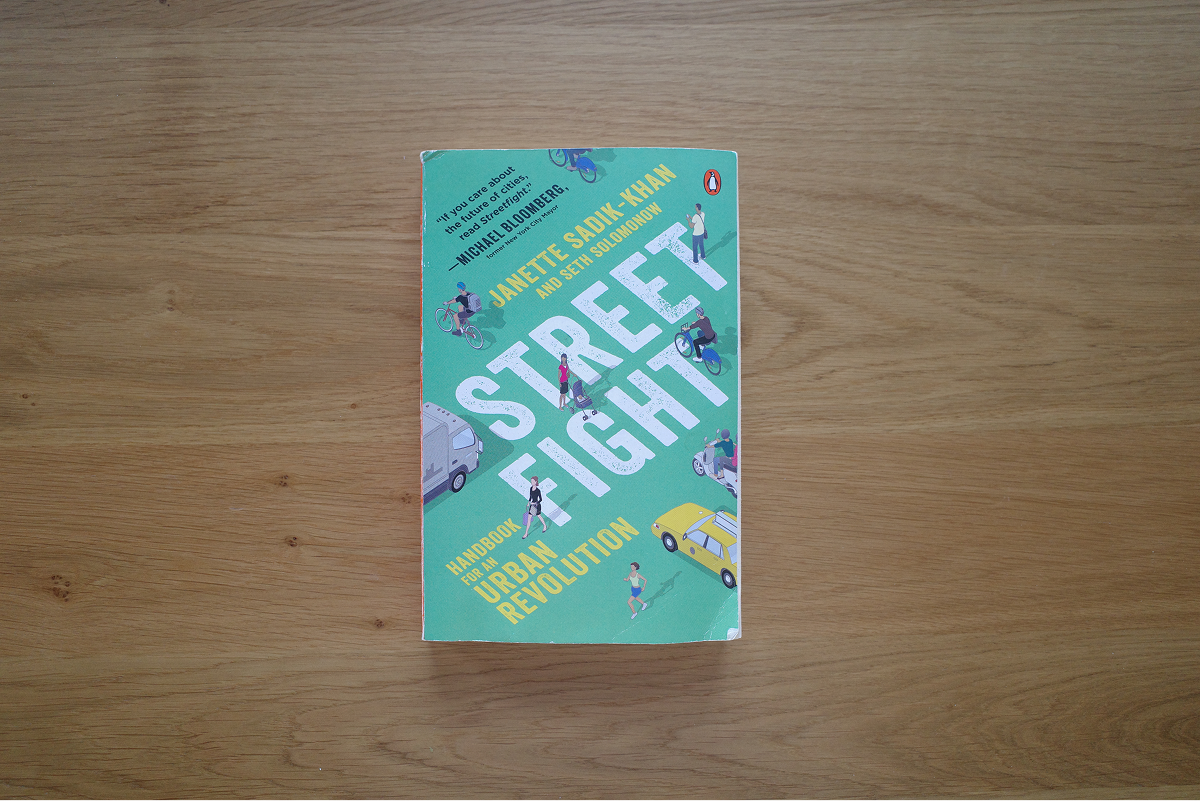
Janette Sadik-Khan, Streetfight
new resources
- Robert Caro’s The Power Broker reveals Robert Moses as the most powerful man in New York during his time, shaping the city’s landscape and political power structures.
- In Urban Jungle: The History and Future of Nature in the City, Ben Wilson explores how modern cities can reestablish their connection with nature and become self-sustaining ecosystems.
a snapshot

if this resonates, you can receive new writing by email: