repair with care
an insight
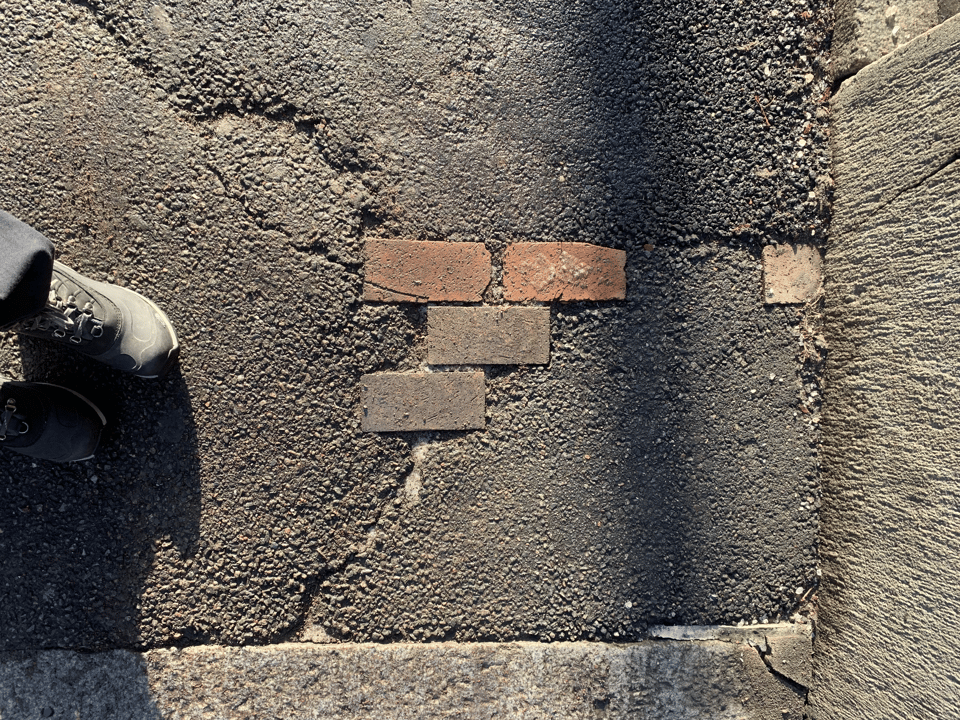
It’s always heartbreaking when a brick road is ripped up for utility work and then left sealed with cement.
I’ve seen it happen countless times in Boston and Providence. To be fair, some roads do get restored — but that’s the exception, not the rule.
Does it have to be this way?
There’s a great example showing otherwise. In Curbing Traffic, Melissa Bruntlett and Chris Bruntlett share their experience living in Delft, Netherlands. In Chapter 2, they describe a utility project where every brick was carefully removed and then reassembled with input from the neighborhood:
After two months of sewage pipe replacement that saw our street — every brick, paver, and curbstone — disassembled, loaded onto pallets, and trucked off; it was gradually being returned and reassembled, piece by painstaking piece. Our new friends were helping the men tasked with putting the footpath back together, carefully selecting the right stone for the job, and switching out pieces that didn’t quite meet their satisfaction. Their feelings of pride and comradery transcended any sense of decorum. (p. 46)
Wouldn’t it be nice if that were the standard? If we considered the whole streetscape and not just the part we’re responsible for?
a snapshot
new resources
- Through meticulous street-level studies, William Whyte’s City: Rediscovering the Center uncovers the hidden rhythms of urban life and explains how small details (such as seating, sightlines, and pedestrian flow) shape the energy and liveliness of public spaces.
- Kevin Lynch’s What Time Is This Place? explores the relationship between time and the built environment, examining how cities reflect the past, present, and future through their design, decay, and renewal.
if this resonates, you can receive new writing by email: